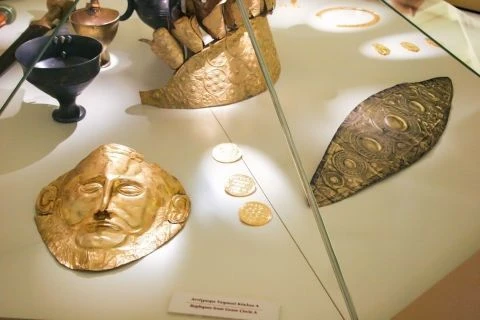
Mycenae
Mycenae, an ancient citadel nestled in the northeastern Peloponnese of Greece, stands as a testament to the grandeur and power of the Mycenaean civilization. Steeped in myth and legend, this archaeological site boasts impressive ruins that date back to the Bronze Age, including the iconic Lion Gate, Cyclopean walls, and royal tombs. According to Greek mythology, Mycenae was founded by Perseus, the legendary hero, and later became the stronghold of Agamemnon, the leader of the Greek forces in the Trojan War. Today, visitors can wander through the ruins of this once-great citadel, marveling at its ancient architecture and imagining the tales of glory and intrigue that once unfolded within its walls. Mycenae offers a fascinating glimpse into the rich history and culture of ancient Greece, making it a must-visit destination for history enthusiasts and curious travelers alike.
Available Tours to Mycenae
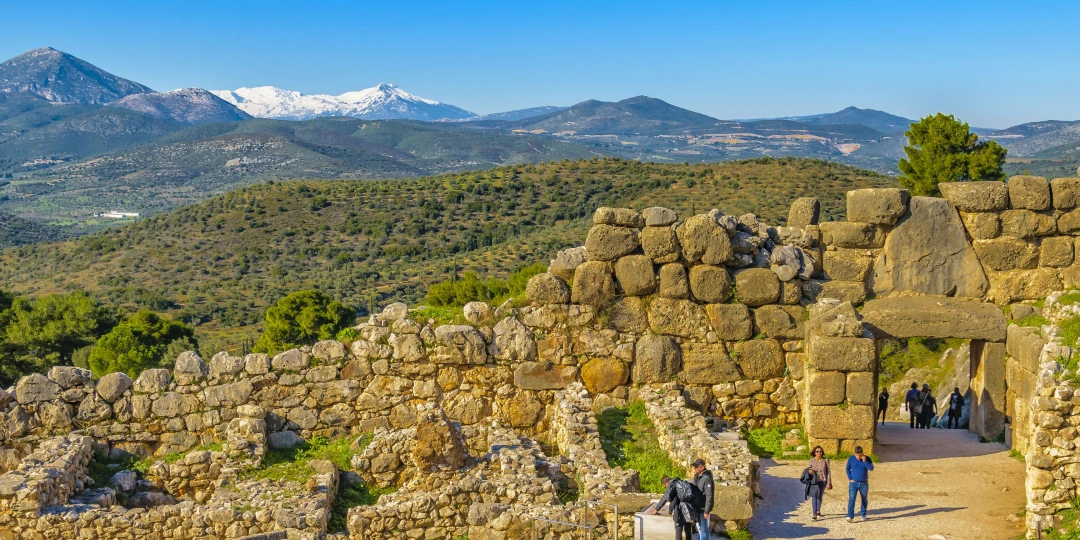
Athens to Mycenae Day Tour
Embark on a 5-hour roundtrip from Athens, visiting three fascinating destinations
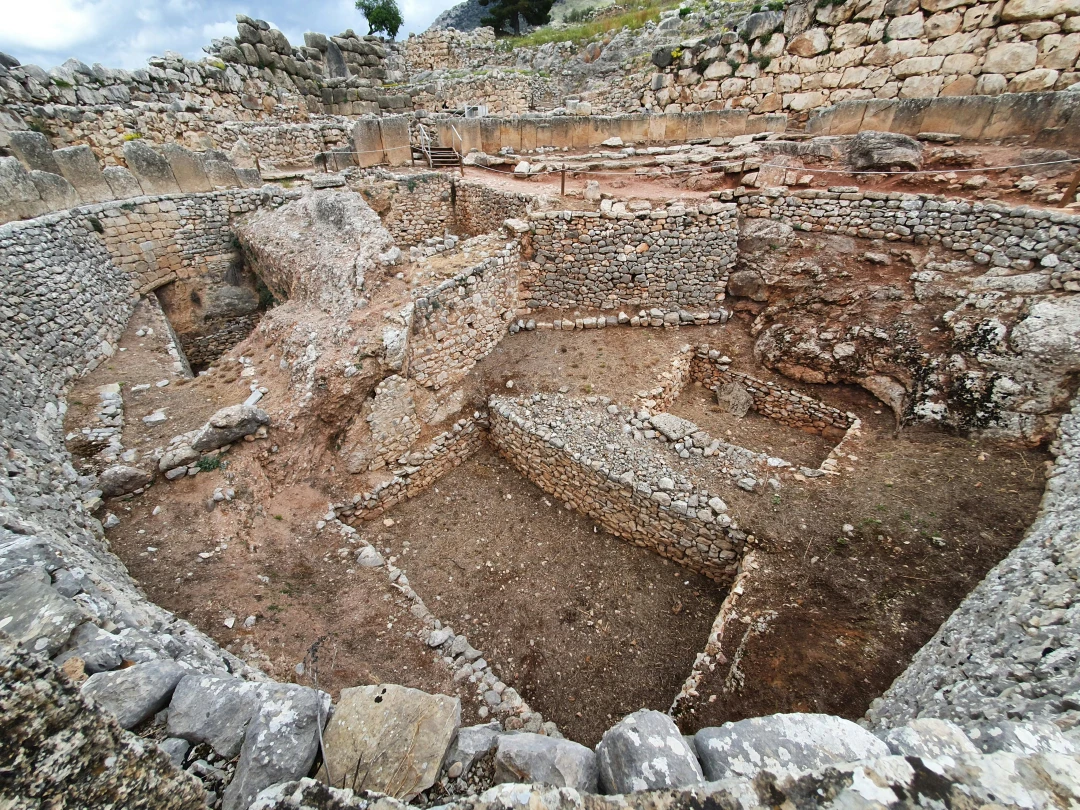
Archaeological site of Mycenae
The archaeological site of Mycenae encompasses a fortified acropolis and adjacent funerary and residential areas, primarily situated to its west and southwest. The majority of the visible structures date back to the zenith of the center’s prosperity, spanning from 1350 to 1200 BC. Dominating the landscape are the imposing Cyclopean walls encircling the nearly triangular acropolis. Accessible from the northwest is the renowned Lion Gate, an emblem of the Mycenaean rulers’ authority. Its name derives from the striking relief sculptures depicting two opposing lions flanking the entrance, embedded within the characteristic relieving triangle—a hallmark of Mycenaean architectural style.
Lion Gate
The Lion Gate, situated on the northwest side of the Bronze Age citadel of Mycenae in southern Greece, served as the principal entrance to the fortified complex. Constructed circa 1250 BC, during the 13th century BC, this monumental structure is renowned for its relief sculpture depicting two imposing lionesses or lions in a heraldic pose, adorning the area above the entrance. Notably, the Lion Gate stands as the sole surviving monumental piece of Mycenaean sculpture and holds the distinction of being the largest sculpture in the prehistoric Aegean. Its significance extends further as the only monument of Bronze Age Greece bearing an enduring iconographic motif that remained uncovered and visible throughout the ages. Moreover, the Lion Gate holds a unique place in the annals of classical antiquity, being the only relief image described in ancient literature prior to the advent of modern archaeology, thus earning widespread recognition and admiration across the centuries.

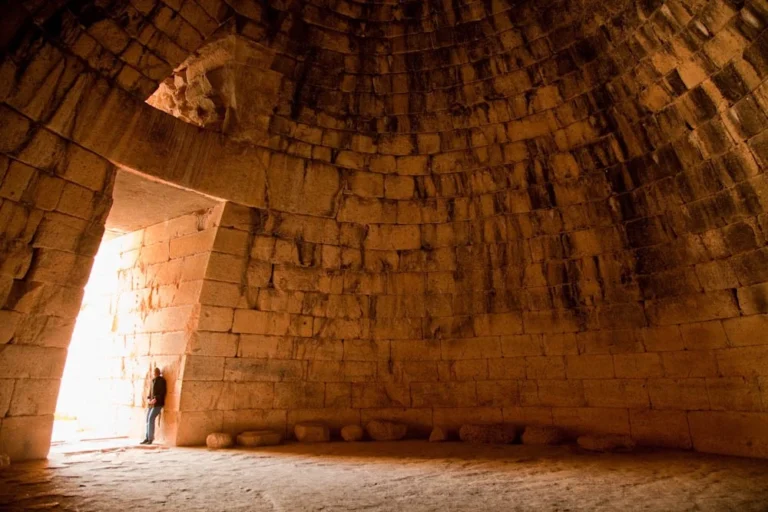
Treasury of Atreus
The Treasury of Atreus, also known as the Tomb of Agamemnon, stands as a remarkable testament to the engineering prowess and cultural significance of Mycenaean civilization. Situated on Panagitsa Hill in Mycenae, this imposing tholos, or beehive tomb, was constructed during the Bronze Age around 1250 BC. Its grandeur is exemplified by the massive stone lintel above the doorway, weighing an astonishing 120 tons and boasting dimensions of approximately 8.3 x 5.2 x 1.2 meters—making it the largest such structure in the world. Despite its formidable size, the purpose of the tomb remains shrouded in mystery, its function and occupants unknown to this day. Mentioned by the Roman geographer Pausanias in the 2nd century AD, the Treasury of Atreus remained visible until its rediscovery by the German archaeologist Heinrich Schliemann in 1879. Its enduring presence continues to captivate the imagination of scholars and visitors alike, offering a tantalizing glimpse into the rich history and enigmatic legacy of Mycenaean culture.
Archaeological Museum of Mycenae
The Archaeological Museum of Mycenae stands as a gateway to the ancient wonders of this storied citadel, conveniently located just a stone’s throw from the iconic Lion Gate. Nestled at the entrance of the archaeological site, this museum offers visitors a captivating journey through the rich history and cultural heritage of Mycenae. Here, amidst the artifacts and exhibits, visitors can delve into the world of ancient Greece, exploring the intricate details of Mycenaean civilization and unraveling the mysteries of its legendary past. From finely crafted pottery to intricately carved sculptures, the museum’s collection provides a glimpse into the daily life, artistry, and achievements of this illustrious civilization. With its prime location and wealth of treasures, the Archaeological Museum of Mycenae serves as an essential starting point for any exploration of this ancient citadel.